

Rajasthan Police Training Emphasises Self-Reflection, Dialogue and Interpersonal Connections from the First Step
Rajasthan Police’s ‘Positive Behaviour in Policing’ Training Programme
The Role of Communication and Trust in Sensitive Policing: Director General of Police, Rajasthan
An Initiative to Understand One’s Behaviour Through Microlab Activities
Sharing Experiences Opens the Path to Learning
Exploring Positive Experiences: The Broader Objective of the Training
-Vijay Srivastava-
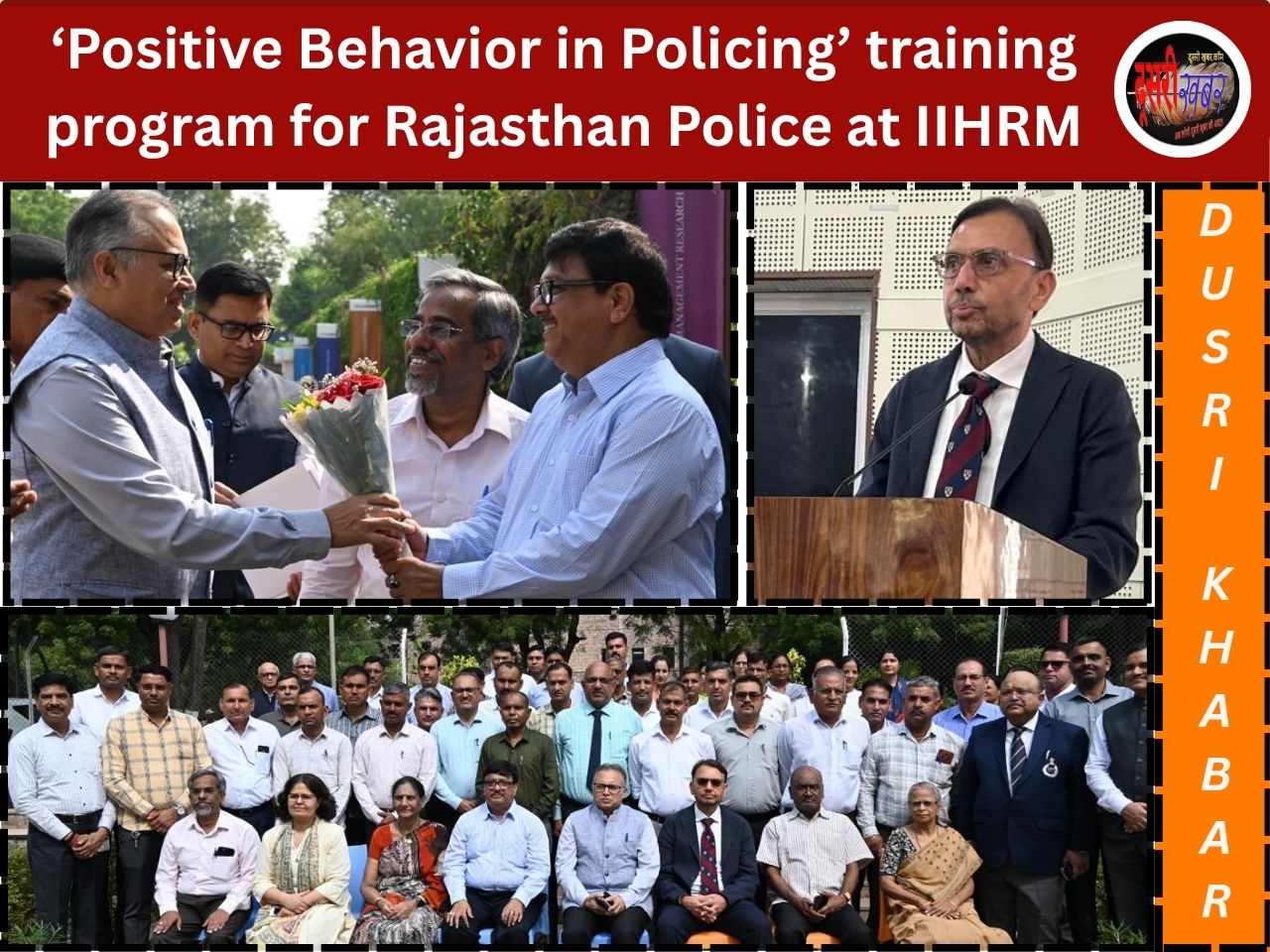
Jaipur, dusrikhabar.com: Positive change in policing begins not only with rules and procedures but also with understanding one’s own behaviour, listening to others and learning from shared experiences. With this approach, the day’s session under Rajasthan Police’s ‘Positive Behaviour in Policing’ training programme focused on self-reflection, introductions and interpersonal connections.
Through microlab activities, police personnel were given an opportunity to reflect on their experiences, understand one another’s perspectives and engage in open dialogue in pairs and small and large groups. The broader objective is to encourage positive behavioural changes among police personnel and help them develop more sensitive, approachable and trust-based relationships with the public.
read also:Rajasthan’s Tobacco-Free Model Resonates in Canada, Drawing Global Recognition
On the second day of the three-day seminar, key aspects of improving policing in Rajasthan were discussed and deliberated upon in detail. The training programme aims to make Rajasthan Police’s working practices more citizen-centric and sensitive. Activities conducted during the initial session played a particularly important role in this process.
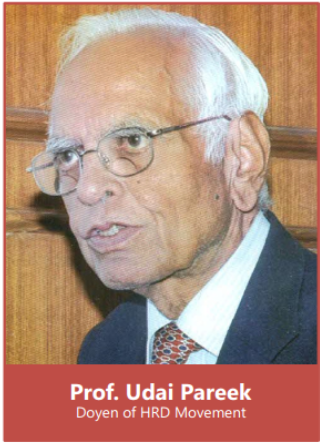 As part of the microlab exercises, participants reflected on their own thoughts, experiences and working styles. Activities involving conversations in pairs and the exchange of ideas in small and large groups were also conducted to encourage stronger interpersonal connections. Apurva Kumar, Chairman of the Udai Pareek HRD Research Foundation, and Dr. Surbhi Purohit stated that various topics were discussed with a positive approach during this training program.
In fact, the responsibility of the police is not limited to maintaining law and order or taking action on complaints. People visiting a police station often approach the police with a problem, fear, dispute or expectation. In such situations, a police officer’s behaviour, listening skills and ease of communication can significantly influence a citizen’s experience. Therefore, self-reflection and communication skills are important foundations for improving policing.
Building trust between the police and the public requires not only effective enforcement of the law but also respectful behaviour and sensitive communication. Friday’s session placed particular emphasis on self-reflection and interpersonal connections, covering the following key areas.
Key Areas Covered During Friday’s Training Sessions
1. Microlab: Introduction and Interpersonal Connection Activities
-
Self-reflection and developing a better understanding of oneself.
-
Sharing thoughts and experiences through conversations between two individuals.
-
Exchanging experiences and ideas in small and large groups.
2. Discovering Positive Experiences: Appreciative Inquiry – Discovery
-
Moments of personal pride: Sharing life events and experiences that individuals feel proud of, including storytelling activities conducted in pairs.
-
Moments of organisational pride: Sharing organisational achievements and experiences that have brought pride to the organisation through group discussions.
-
Identifying the reasons behind moments of pride: Understanding the factors that made these achievements and positive experiences possible.
3. Emotional Management
-
Understanding and managing emotions in personal and professional situations.
-
Identifying emotional triggers and learning effective ways to manage their impact.
4. Envisioning the Future Through a Positive Approach: Appreciative Inquiry – Dream
-
Imagining an ideal Rajasthan Police station unit over the next two years.
-
Developing empathy and a better understanding of others’ perspectives.
-
Promoting effective communication and interpersonal skills.
5. Stress Management
-
Understanding the causes of stress in personal and professional life.
-
Discussing effective ways to cope with stress and maintain mental and emotional balance.
6. Building Trust and Effective Communication
-
Strengthening mutual trust and cooperation.
-
Managing high-pressure situations at the workplace.
-
Developing effective communication and dialogue skills.
7. Healthy Lifestyle and Nutrition
-
Understanding practices that contribute to a healthy lifestyle.
-
Raising awareness about the importance of a balanced and nutritious diet.
8. Developing a Positive Police Image and Building the Police Brand
-
Creating a positive public image of the police.
-
Increasing public trust and respect for the police.
-
Making police working practices, behaviour and public relations more positive.
9. Positive Future Planning and Action Plan Development: Appreciative Inquiry – Design
-
Identifying the gap between vision and reality: Understanding the differences between the desired state of a police station unit and its current functioning.
-
Identifying the reasons for these gaps: Examining issues related to soft skills, particularly behavioural and communication skills, and identifying opportunities for improvement.
-
Developing group-based action plans: Preparing collective plans to address identified gaps, achieve defined objectives and implement improvements.
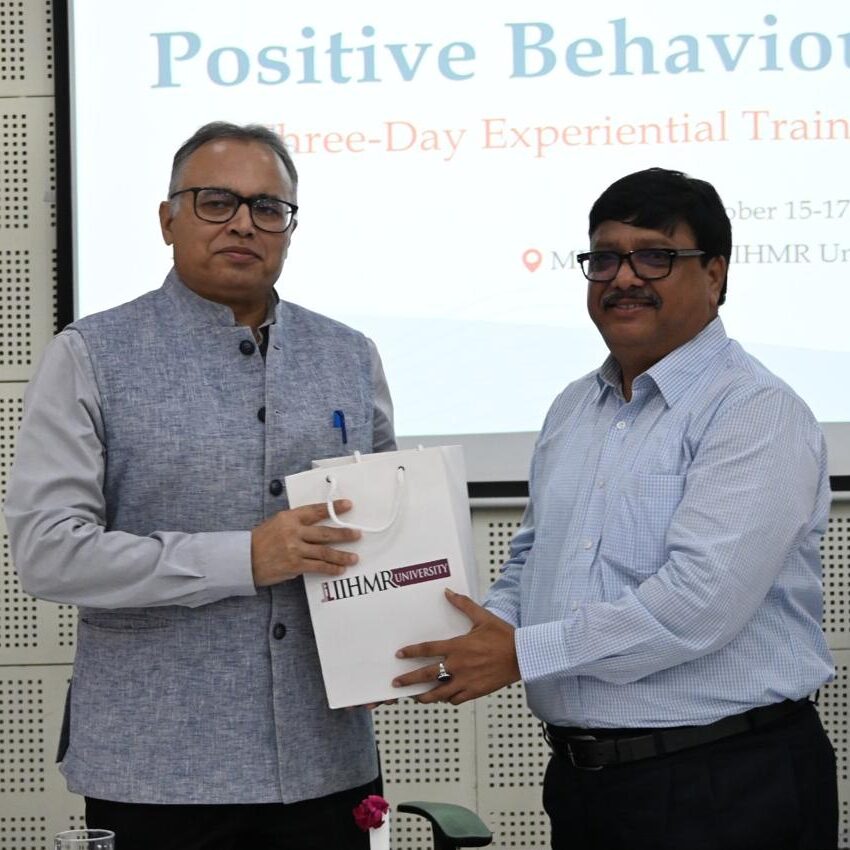
DGP Rajiv Kumar Sharma (In Blue Jacket) and PR Sodani, Chairman of IIHMR University jaipur.
DGP Rajiv Kumar Sharma Inaugurates the Three-Day Training Programme
On Thursday, Director General of Police Rajiv Kumar Sharma inaugurated the training programme at the campus of IIHMR University. A total of 35 police personnel are participating in the programme, which is scheduled to continue until October 17.
During the inauguration, the DGP emphasised that strictness towards criminals and sensitivity towards the general public should remain the fundamental principles guiding police functioning.
He called upon police personnel to listen sensitively to people who visit police stations with complaints and make every effort to provide them relief in accordance with legal procedures.
In this context, the activities conducted during the current session assume particular significance. Understanding one’s own behaviour, listening to colleagues’ experiences and creating a comfortable environment for dialogue are important initial steps towards developing skills that can prove useful when interacting with citizens and resolving their grievances.
Better Policing Begins with Change from Within
Police personnel often have to work long hours, make quick decisions and deal with challenging circumstances. In such an environment, the importance of emotional balance, clear communication, mutual trust and empathy becomes even greater.
The subsequent sessions of the training programme also cover subjects such as stress management, understanding emotions, building trust and improving communication skills.
However, the real success of any training programme cannot be measured solely by participation in its sessions. It depends on how effectively the lessons learned are incorporated into everyday working practices.
From this perspective, microlab activities provide police personnel with an opportunity to reflect on their behaviour, learn from their colleagues and take meaningful steps towards positive change. These efforts can help lay the foundation for a policing system that is more sensitive, approachable and responsive to citizens’ needs.
————————————-
#Rajasthan Police, #Jaipur, Police Training, #Positive Behaviour in Policing, #IIHMR University, #Microlab, #Self-Reflection, #Positive Policing, #Police Reforms, Rajasthan Police Training, Positive Behaviour in Policing, Microlab Activities, Police Behaviour Improvement, Sensitive Policing, Self-Reflection, Police Training in Jaipur
