

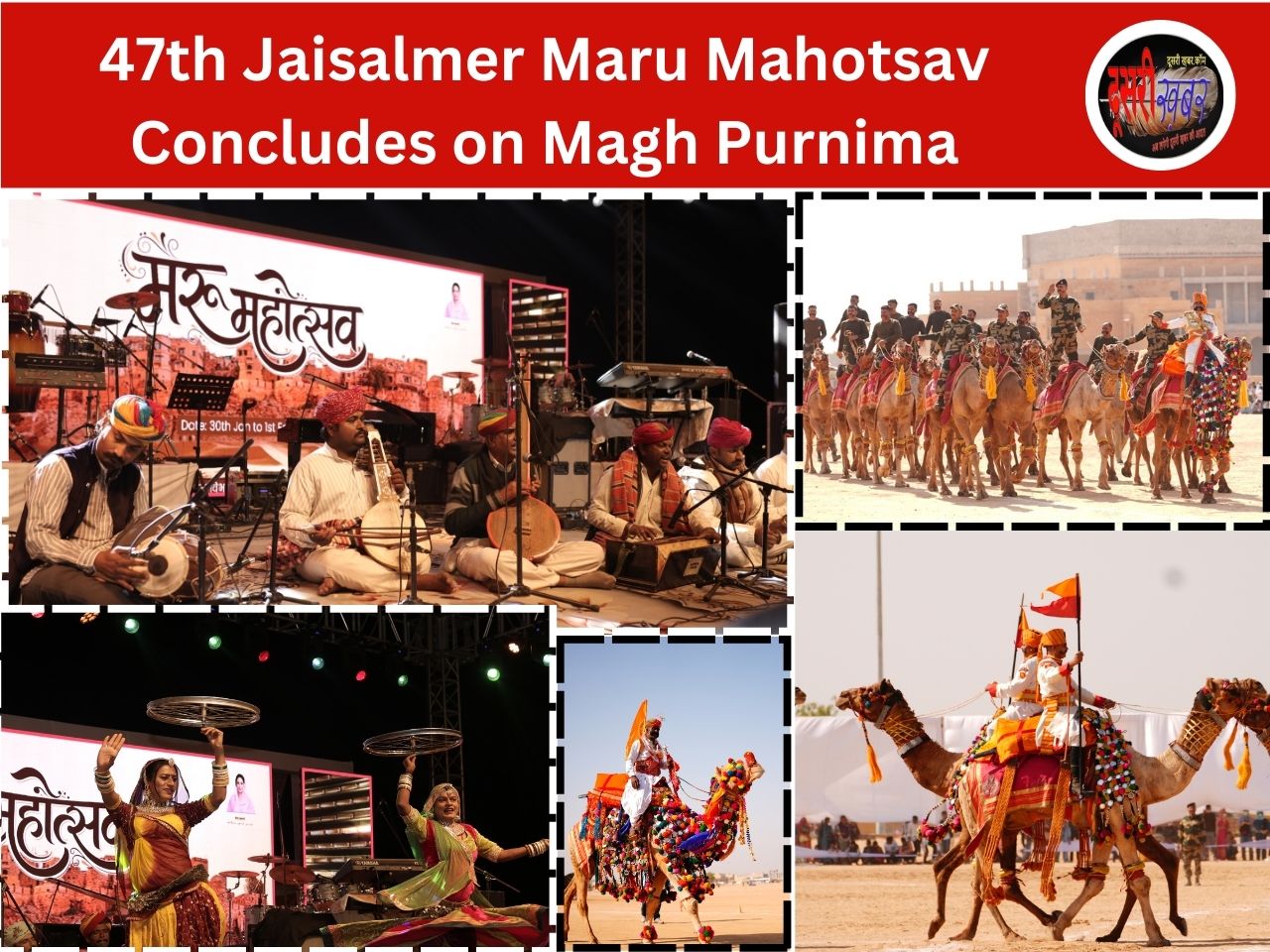
47th Jaisalmer Maru Mahotsav Concludes on Magh Purnima
Maru Mahotsav Is Not Just a Festival, but a Public Celebration of the Desert’s Soul
Four-day Maru Mahotsav expands from Pokaran to Jaisalmer, giving a wider platform to Thar culture
Folk dances, camel races, and cultural evenings amid sand dunes captivate audiences from India and abroad
30,000–40,000 domestic tourists attend; large number of foreign visitors from European countries
Naveen Saxena,
Jaipur / Jaisalmer, dusrikhabar.com. A symbol of the cultural identity of the Thar Desert, the Jaisalmer Maru Mahotsav once again concluded traditionally on Magh Purnima. The 47th Maru Mahotsav, held in 2026, emerged not merely as a cultural event but as a public celebration of the desert’s soul. The four-day festival infused new energy into folk culture, tourism, and the local economy.

Rukmani Riyad, Tourism Commissioner
Beginning from Pokaran, Reach Expanded Across the Desert Region
According to Rajasthan Tourism Commissioner Rukmani Riyad, the Maru Mahotsav concluded on Magh Purnima as per tradition. She stated that Pokaran has been included in the festival for the past three years, transforming it into a four-day event. As a result, the festival is no longer confined to Jaisalmer alone but has expanded across the entire desert region.
read also: फिल्ममेकर विक्रम भट्ट की जमानत खारिज, उदयपुर में करोड़ों की धोखाधड़ी…
She added that the objective of the Maru Mahotsav is not limited to organizing cultural programs, but also to preserve desert heritage while promoting domestic and international tourism. In line with this vision, the festival once again commenced from Pokaran, where religious rituals, a ceremonial procession, and performances by local artists marked the beginning of the event.
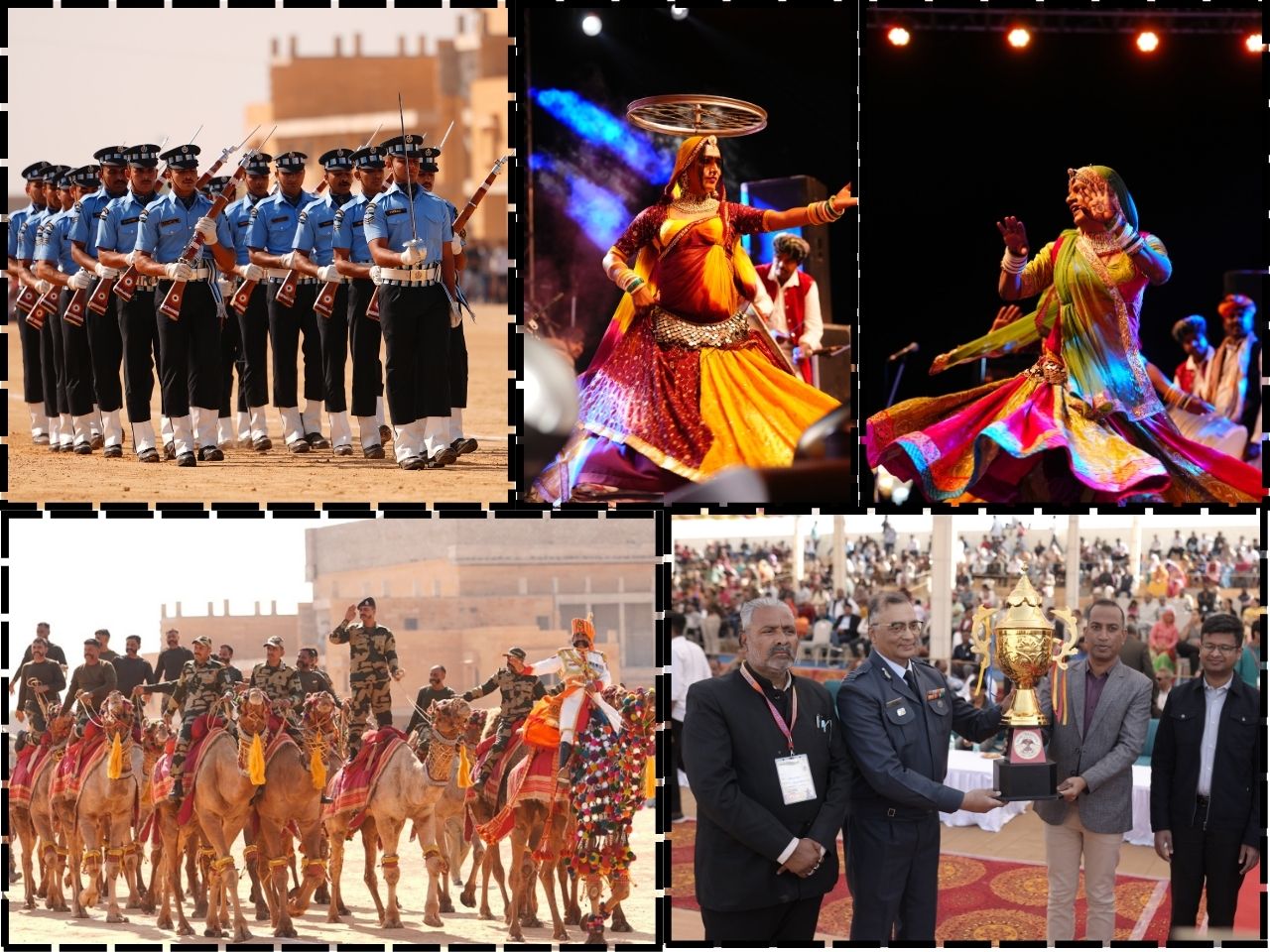
Vibrant Events at Multiple Locations in Jaisalmer
After Pokaran, the festival moved to Jaisalmer, where cultural, traditional, and sporting events were organized at several locations, including Gadisar Lake, Shaheed Poonam Singh Stadium, Dedansar Stadium, Sam, Lakhmana, and the Khuri Sand Dunes.
read also:समन्वय और पारदर्शिता से बदलेगा शहरी विकास का चेहरा: वी श्रीनिवास
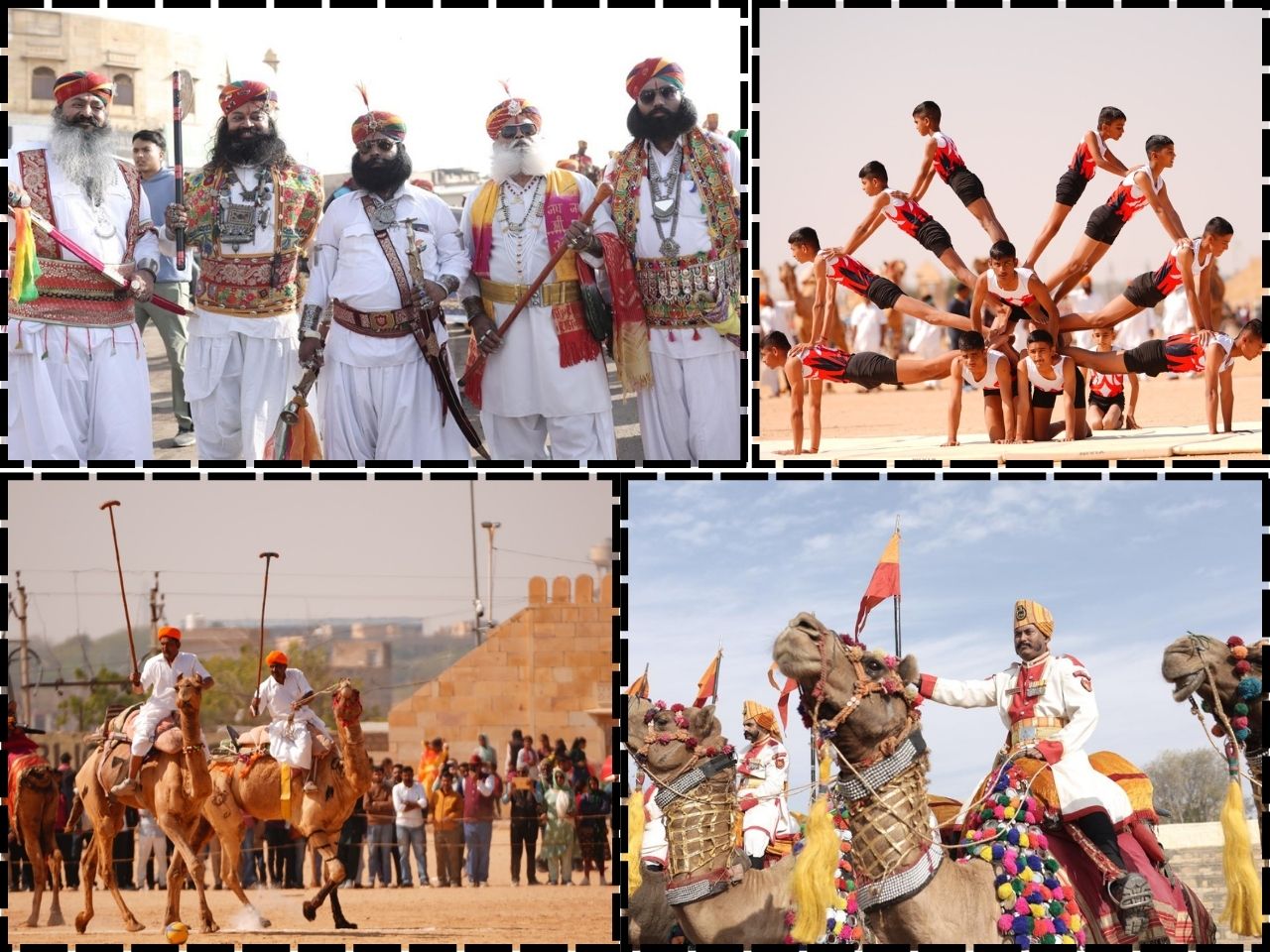
Over the four-day celebration, events such as folk songs and dances, camel races, camel decoration, camel polo, turban-tying and moustache competitions, rural games, along with handicrafts and food festivals, attracted a large number of visitors from India and abroad.
nclusion of Pokaran Gives Local Culture a New Identity
Kamleshwar Singh, Assistant Director of the Tourism Department, stated that the inclusion of Pokaran in the Maru Mahotsav aims to provide a broader platform for desert cultural heritage and to extend tourism activities beyond Jaisalmer to surrounding regions. This initiative has helped local artists, rural sports, and regional traditions gain new recognition.
He also mentioned that the formal beginning of Maru Mahotsav dates back to 1979, when the Rajasthan government adopted a policy to place desert districts on the tourism map. In the early years, folk music, folk dances, camel decoration, and traditional attire were the main attractions.
read also: ‘ये बजट MSME को लोकल से ग्लोबल बनने की ताकत देगा..’, PM मोदी ने बताया अपार अवसरों का हाइवे
Camel Becomes the Central Symbol of Maru Mahotsav
Over time, the camel emerged as the central symbol of the Maru Mahotsav. Camel races, camel dances, and best-decorated camel competitions gave the festival a national identity. Kamleshwar Singh also recalled that during the devastating earthquake in Gujarat, the festival was not organized due to national mourning, reflecting its social responsibility.
Strong Presence of Foreign Tourists
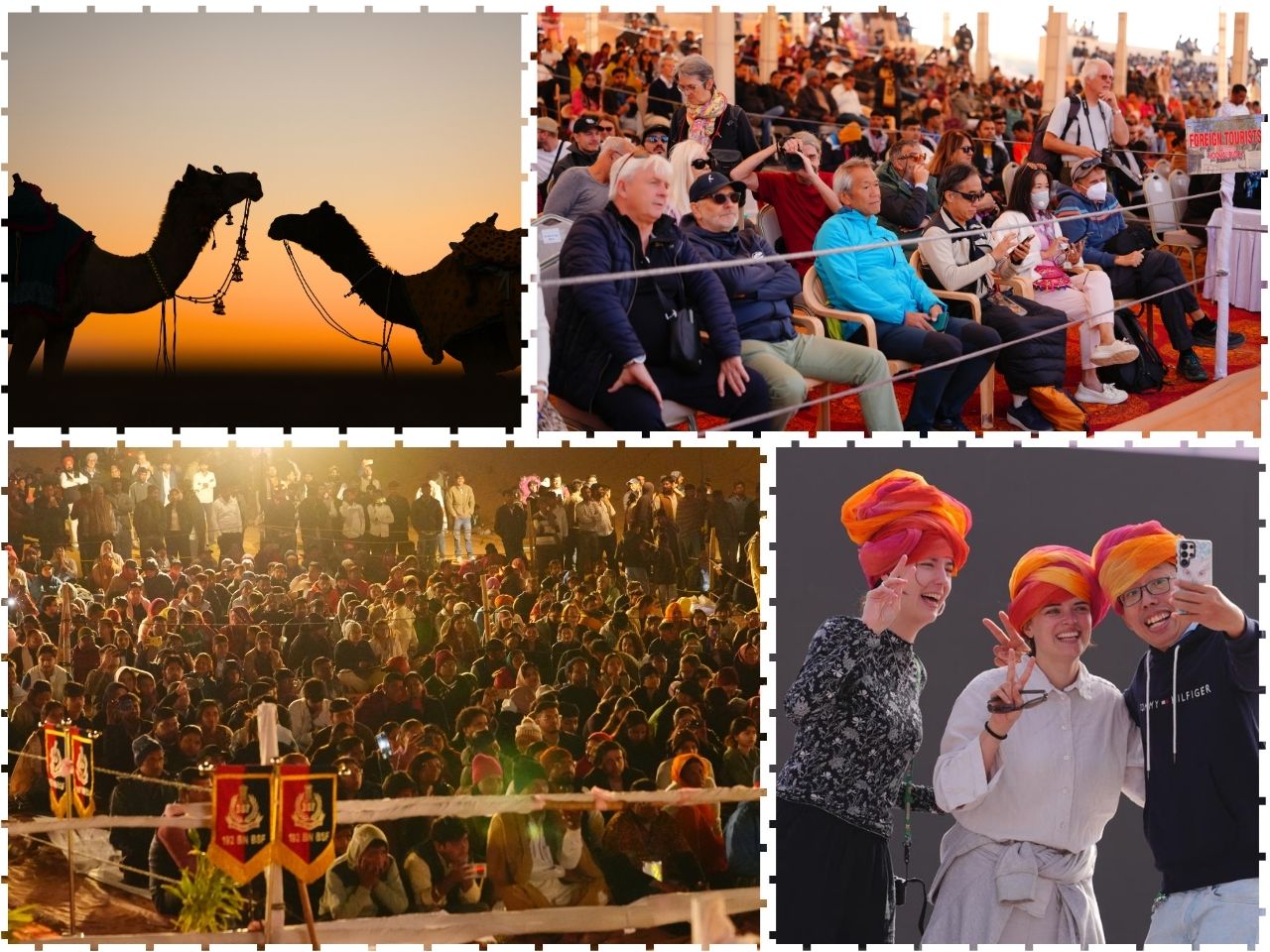
During the 47th Maru Mahotsav, a significant number of foreign tourists visited Jaisalmer. According to the Tourism Department, visitors from Germany, France, the Netherlands, and several other European countries attended the festival. Desert folk dances, camel competitions, and open-air cultural evenings under the night sky were major attractions for international visitors.
Participation of 30,000–40,000 Domestic Tourists
The festival recorded the presence of approximately 30,000 to 40,000 domestic tourists, including visitors from Rajasthan, Gujarat, Maharashtra, Delhi, Uttar Pradesh, Madhya Pradesh, Punjab, Haryana, West Bengal, Karnataka, Tamil Nadu, and Kerala.
Hotels, resorts, homestays, and desert camps witnessed near-full occupancy. According to tourism stakeholders, the Maru Mahotsav provided direct economic benefits to local markets, handicraft vendors, folk artists, and transport services.
Traditional Conclusion on Magh Purnima
On Magh Purnima, the Maru Mahotsav concluded traditionally with religious rituals and final cultural performances. The district administration and the Tourism Department described the event as successful, stating that the Maru Mahotsav has now become a permanent and major event in Rajasthan’s tourism calendar.
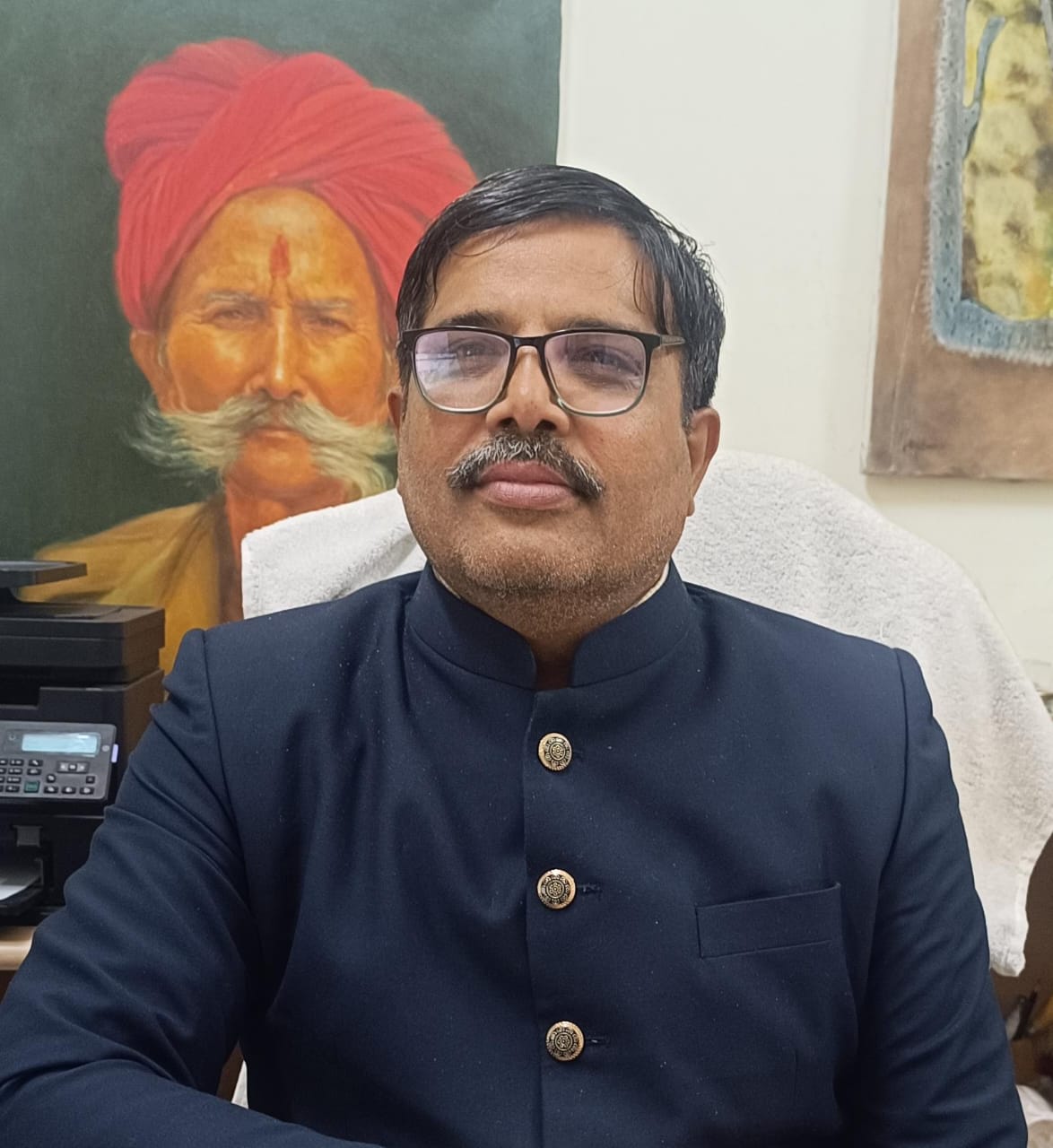
Dalip Singh, Joint Director Tourism
Maru Mahotsav: A Cultural Journey of 47 Years
Dilip Singh Rathore, Joint Director (Tourism), stated that the Maru Mahotsav was initiated with the objective of preserving desert folk culture and promoting off-season tourism.
He explained that during 1986–1995, camel dances, camel races, and best-decorated camel competitions brought national recognition to the festival. Later, during 1996–2005, events such as turban-tying, moustache competitions, rural games, and Mr Desert significantly increased public participation.
————
#MaruMahotsav, #JaisalmerFestival, #DesertFestival, #RajasthanTourism, #TharCulture, #Pokaran, #IncredibleRajasthan, Jaisalmer Maru Mahotsav, 47th Maru Mahotsav, Thar Desert, Rajasthan Tourism, Desert Festival, Magh Purnima, Foreign Tourists
